Counter drone at the speed of light
UAS now use countermeasures such as rapid manoeuvre, rotation, thermal isolation, and reflective coatings — tactics that make large swarms harder to track and engage. Apollo, developed by Australian company, EOS, has evolved over more than a decade to meet this challenge, delivering precision engagement, high power levels, and continuous-fire capability to defeat these increasingly complex threats.
At 100kW power, Apollo can quickly defeat UAS, even when they use countermeasures. Its increased laser power and reduced dwell time between engagements enable it to disable more than 20 UAS per minute at typical ranges for swarm attack.


US Ally Expands Patrol Plane Fleet Amid China Tensions
23 October 2025 Newsweek article on the re-formation of No 12 Squadron.
A comprehensive history of No 12 Squadon up to its disbandment on 25 August 1989 is at: https://raafdocumentary.com/12-squadron-history/
Defence orders brutal budget cuts as AUKUS and frigate costs soar
Chief of Air Force, Air Marshal Stephen Chappell, has initiated reviews of capability and sustainment costs as part of a service-wide push to “mitigate overspending” and “address budget challenges”.
Australia’s Air Power Strategy – Chief of Air Force Outlines Vision for Deterrence and Defence
New RAAF P-8A Squadron
Number 12 Squadron has been re-established as the RAAF’s second operational P-8A squadron. At the same time, the country’s 13th P-8A Poseidon aircraft has arrived.
First F-47 now being built, will fly in 2028: US Air Force chief
The Air Force’s first F-47 fighter is now being built by Boeing, and the advanced jet is expected to have its initial flight in 2028.
U.S. MV-22B Ospreys will stay in Australia
The U.S. Marine Corps continues to refine the role of MV-22B Ospreys in anti-submarine warfare, this time with an eye on the Indo-Pacific.
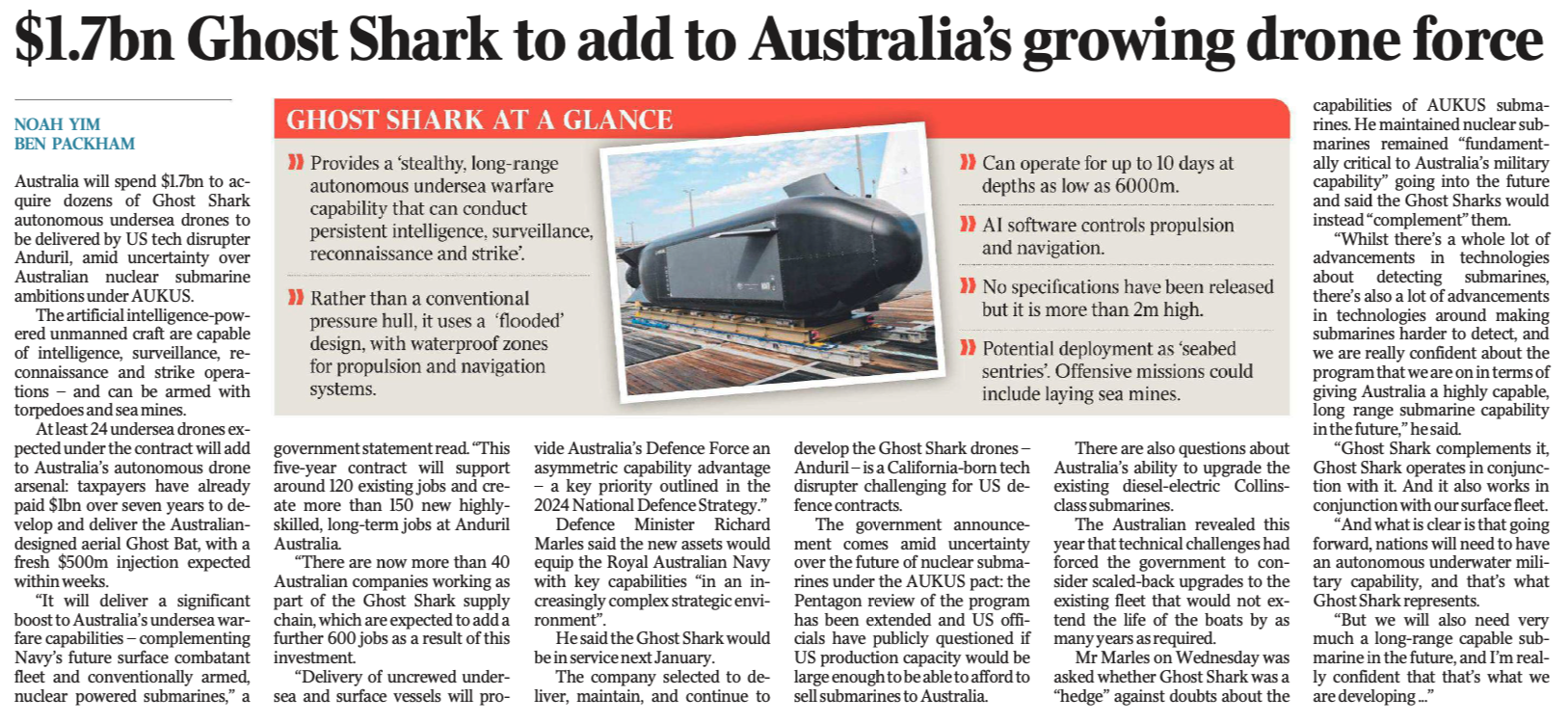
The Australian – 11 September 2025
Australia selects Mogami frigate
Australia has selected Japan’s improved Mogami-class frigate design for its future fleet of general-purpose frigates, in a deal with further cements ties between the two US Indo-Pacific allies and gives Japan its first major defense export.
Missteps, Equipment Problems and a Common but Risky Practice Led to a Fatal Crash
New details revealed by The New York Times show that the failures on 29 January 2025 before an Army helicopter crashed into a jet near Reagan National Airport were far more complex than previously known.
RAAF Set to Receive New Multi-Mission Aircraft
The Royal Australian Air Force (RAAF) is set to receive a new multi-mission intelligence aircraft, the MC-55A Peregrine, this year. Prime contractor L3Harris is finalising developmental work after delays in the program.
Text and 9:40 video.
History is Not on Russia’s Side
It’s fair to say, the Second World War aside, Russia’s wars make for pretty sorry reading – if you’re Russian.
Measures of liquid fuel stocks
Liquid fuel stocks in Australia are typically reported in volume, mass or days equivalent. These stocks are measured and reported using three different methods for three different purposes and are not directly comparable.
12 questions on the 2023-24 Defence budget
With Michael Shoebridge having to (regretfully) withdraw from our 27 March 2025 lunch, RAAFSCA members may be interested in the following thoughts from him.
Michael Shoebridge writes:
As the Federal budget and election loom and lamington recipes are dug out of drawers, two recent events have demonstrated that Australian military power and the basic assumptions about our security both need urgent change. The first event was three powerful Chinese warships circumnavigating Australia (fitfully watched by our ageing Navy fleet). The second is the Trump Administration’s upending of the transatlantic relationship, with NATO at its core.
Whoever wins government at this election, this next 3 years is a time for urgent improvements in our Defence Force’s capabilities and operational mindset to be able to do more for ourselves quickly – regardless of whether America becomes an unreliable ally or just a far more demanding one.
That’s why SAA has teamed with the Institute of Public Affairs to produce the menu for the next Federal government on defence: ‘No Higher Priority’ was launched by former Governor-General and Chief of the Defence Force Sir Peter Cosgrove and former Prime Minister Tony Abbott last week.
The work sets out a cure for the Australian military’s debilitating illnesses that will also give taxpayers value for money when it comes to the military power our $55bn spend should be delivering now.
No more reviews, instead, the work sets out practical recommendations across 6 core areas:
1. national security and the North;
2. an ADF that meet strategic needs;
3. unleashing Australian companies to create military power;
4. the money and spending it to achieve results;
5. critical infrastructure and homeland defence; and
6. the US alliance and fixing the Russell offices borg.
No Higher Priority is available as a hard copy or digital copy at this link.
The 2025 Defence budget update: still sleeping walking to disaster
Despite everything that has happened in the world since 2016 (such as the de facto annexation of the South China Sea by China, Russia’s invasion of Ukraine, Donald Trump walking away the West and the rules-based global order, etc), the Defence Budget is stuck in its sleepwalk from the 2016 Defence White Paper. The only addition that has been made to the Defence’s 2024-25 funding line since 2016 has been $400 million, or a 0.7% increase.
So despite governments of both sides of politics saying we’re in the most uncertain security environment since World War II and we no longer have warning time (we can all recite these words by heart after the 2020 Defence Strategic Update, 2023 Defence Strategic Review, 2024 National Defence Strategy and untold numbers of speeches, doorstops, interviews and other affirmations of the seriousness of our circumstances), Defence has had only a 0.7% increase to a ten-year old plan.”
Read more here:
https://strategicanalysis.org/the-2025-defence-budget-update-still-sleeping-walking-to-disaster/
Beijing tested our defences — Anthony Albanese blew it.
China’s threatening weapons tests in the Tasman last week are a consequence of successive Australian governments failing to anticipate strategic risk, and plan sensible responses. The reality of decades of not properly funding Defence is becoming clear.
When our navy and air force are incapable of mounting a coherent operation to monitor, respond and pressure three Chinese ships firing weapons between the east coast of Australia and New Zealand, we should all understand this is an unacceptable political and military failure.
Sounding aggrieved, Defence Industry Minister Pat Conroy claims the Chinese boats were subject to “unprecedented” levels of Australian surveillance. That might have been true if our forces had detected the weapons tests but floating meekly over the horizon impresses no one.
Something must change, and quickly. What is supposedly a bipartisan approach to defence is not working. Spending is too low; equipment programs are badly designed and will not deliver for years. As a result, good people are leaving the ADF in unsustainably large numbers.
There is no plan informing where and how we may need to use our forces, and a bureaucratic and political failure to think through how to deal with the biggest threat, China, and our most important partner, the US.
https://strategicanalysis.org/beijing-tested-our-defences-anthony-albanese-blew-it/
Elon Musk’s DOGE and American military power – there’s a tsunami coming
Elon Musk has the goal of saving $US1 trillion dollars from the US Federal Government’s expenditure by 30 September 2025. He has to find cuts of $4 billion every day until then. The sheer numbers mean Pentagon and US military power will be in the frame along with everything else.
At the remarkable February Musk-Trump Cabinet meeting, President Trump told Musk to be more aggressive – because it was running about $15 billion behind at that time.
So, we’re only at the beginning for what lies ahead to September.
The raw numbers of the US budget are $7.028 trillion in spending, with $5.163 trillion in revenue, leaving a $1.865 trillion deficit. Musk’s $1 trillion savings goal Musk is 15% of US government spending.
That scale of cuts can’t be found in diversity programs or ending salaries of dead civil servants still on payrolls – two poster children for the MAGA crowd. Closing whole agencies like the Education Department also won’t be enough – they’re blips in $7 trillion. DOGE will have to go to all big spend areas in the budget and get that chainsaw out that Musk frolicked with at a recent conservative convention. That means social security ($1.5 trillion) and health, Medicare and Medicaid (at $1.8 trillion) and Defense (at $859 billion).
https://strategicanalysis.org/doge-and-american-military-power-theres-a-tsunami-coming/
The Grumpy Strategists & the AustDefMagazine look at the state of the world and Australia’s defence. It’s a bumpy ride.
Not since Run DMC & Aerosmith did “Walk This Way” has there been a collaboration like this, except on…..defence stuff….
Marcus & Michael join the AustDefMagazine Crew to assess Defence officials’ patient explanations of why everything they touch takes 10 years, minimum. Marcus reveals his previous career in standover work & organised crime as we assess Trump 2.0 six weeks in. And we look at AUKUS’ health and reason for living in the new world.
Listen to Episode 34 here.
Read the latest SAA analysis here
7:41 video in which Sir Alex Younger, head of MI6 between 2014 and 2020, gives his summary assessment of the current international geopolitical situation.
Selling the Mirage
RAAF Staff College Association member, Air Vice-Marshal (Ret’d) Richard Bomball AO, AFC has recently published his account, as leader of the team that successfully sold the RAAF’s retired Mirage fleet to Pakistan. Richard’s book, “Selling the Mirage” is a non-profit venture financed entirely from his own resources purely for historical purposes, and is available on-line direct from the publisher at: http://www.bytespublishing.com.au/ for $27.65 (plus postage if outside of Canberra).
Selling the Mirage is a detailed account of the day-to-day activities of the team which successfully negotiated Australia’s first major international arms export: the sale of the RAAF’s retired Mirage fleet to Pakistan.
The account covers the hurried preparation, development of negotiating strategies, the events, some quite unexpected, that led to the finally agreed price and schedule of payments, and the intense period of contract negotiation.
The record includes a very extensive collection of the press clippings covering the domestic and international furore that erupted following the announcement of this controversial event.

The fall of Assad & what it means for the Middle East
Text and 1:11-hour video featuring US commentator Chris Hedges and former UK diplomat, Alastair Crooke.
Opinion – Jason Thomas
(15:20 video by Military Affairs) The US Navy workhorse F/A-18 Super Hornet is currently undergoing a big upgrade and recently was spotted carrying an air-to-air load-out unlike anything that has come before. Video previews improvements the engineers have made and implemented, how it differs from prior designs, and how it could be used in potential conflict.
Satellites go out- defence in $7bn hit
The Game-Changing Impact of Commercial Drones on Modern Warfare
Australian War Memorial Development
Since 2021, the construction fences have gradually come down on a $550 million redevelopment of the Memorial, starting with an expanded and reshaped parade ground out the front, which reopened just in time for Anzac Day commemorations in April.
The ‘Commemorative Entrance’ has been reopened to the public, including the original entrance, stairs, and forecourt, which are visible by looking directly up Anzac Parade.
To mark the occasion, the Memorial also revealed a digital sneak-peek inside the main entrance and foyer, said to open this summer.
This will include “public spaces dedicated to telling the stories of recent conflicts and the Australians who served in them” in the form of galleries for the wars in Afghanistan, Iraq and Syria.
“There will be galleries that address the fact that Australians have been deployed in peacekeeping operations every single day since 1947,” Australian War Memorial Director director Matt Anderson said.
The main feature is the glass Oculus, Latin for ‘eye’, which was craned into place in July.
It’s said to be the inversion of the Memorial’s iconic green-coloured dome and takes the form of a large skylight with glass ‘petals’ set into a steel frame. Each petal, imported from Spain, weighs 350 kg.
From above, visitors will be able to look down into the foyer, while from below, visitors can glimpse the dome itself.
“The oculus is about maintaining a visual connection to the existing entrance and also bringing light into the space,” the designer from SC Studio, Doug Southwell, said.

Next on the construction list is Anzac Hall, which will provide an additional 4000 metres of gallery space thanks to a new two-storey building to house and display exhibitions and some of the larger technology objects currently locked away in the Memorial’s warehouse in Mitchell.
A “glazed link” will connect the new hall to the main building and contain “non-light sensitive large technology objects (including aircraft and armoured vehicles), a café/restaurant, and space to support the Memorial’s educational programs”.
The new Anzac Hall will open in 2026, and the broader project is scheduled for completion in 2028.
“We have assembled a world-leading collection of the stories, the artefacts, the objects that tell the story from Gallipoli to Afghanistan and more in one place,” Mr Anderson added.
The reopening comes as travel site Tripadvisor gives the Australian War Memorial its ‘Travellers’ Choice Best of the Best Award for 2024′, which places it in the top one per cent of Tripadvisor’s 1.6 million listings worldwide.
The World’s Largest Shipyard Is Helping the U.S. Catch Up to China’s Navy
(6:35 video by Wall Street Journal) China’s fleet of warships is eclipsing the U.S. As tensions between the two global powers grow, the U.S. is looking to South Korea, one of its biggest allies in Asia, to help increase its battleship supply.
Ex-RAAF Air Vice-Marshal to head Lockheed Martin in Australia
ABC RN Global Roaming podcast broadcast 16 Aug 24. In a sign of our deepening strategic ties, Australia will play host to more frequent US military deployments across air, land, and maritime domains. At the same time, an updated AUKUS agreement provides a ‘get-out’ clause for the US and the UK. Former prime minister Paul Keating has raised his concerns, but he’s not alone is asking: Is Australia getting the short end of the stick? Guest: David E. Sanger is chief Washington correspondent for The New York Times and the author, most recently, of New Cold Wars: China’s Rise, Russia’s Invasion, and America’s Struggle to Defend the West.
Guide To Ukraine’s Long Range Attack Drones
Boeing Defense, Space & Security has unveiled a system that allows the C-17 Globemaster III to launch multiple hypersonic missiles. Dubbed the “Revolver”, the innovative system features an advanced electromagnetic catapult system that enables the rapid launch of up to twelve X-51A Waverider hypersonic cruise missiles.
Australia awards Boeing contract for P-8A upgrades
The Increment 3 modification includes capability for four x AGM158C Long Range Anti-Ship Missiles (LRASM) – sharing an existing Super Hornet capability. The missile has a range of 300 nm and is targeted by the P-8, datalink or its own onboard IR, visual & GPS sensors.
First RAAF Triton uncrewed maritime reconnaissance aircraft arrives in Australia
Reflecting on the UAV presentation to Aviation Club members (and several RAAFSCA members) on 30 May, including the possible effect of a swarm of $5,000 Australian ‘cardboard attack drones’ on a Russian air base, Aviation Club President and RAAFSCA member Bob Richardson has kindly curated a number of articles from The Australian Defence Report (28 May) Many of the articles, especially the F-35 and Super Hornet weapons upgrades, and our northern base defences, are both illuminating and readable.
The Lowdown On Lockheed’s Newly Revealed Mako Hypersonic Missile
How drone combat in Ukraine is changing warfare
Appointment of Australian Defence Force senior leadership
KC-30A returns from Spain after comms upgrade – (Australian Aviation)
Royal Australian Air Force quietly bids farewell to the ‘Mighty Hunter’

First RAAF MQ-4C Triton unveiled
US Coast Guard ship denied port call in Solomons
2021 Census results: Australian Defence Force Service
2022 Australia Day Honours List
2021 Christmas message from Chief of Air Force and Warrant Officer of the Air Force
CDF Order of the Day – Afghanistan
Defence to establish space division in Canberra early next year
Chief of Air Force Order of the Day – RAAF Centenary
Chief of the Defence Force Order of the Day – RAAF Centenary
Air Commodore Paul Godfrey announced as Commander United Kingdom Space Command
Australia Day 2021 Honours List – Defence Recipients
Regional alliances unlikely to bring security: defence expert Hugh White
The Defence Strategic Update and Australian Defence Force Mission Alignment
Interview with the Chief of Air Force
The Chair of the Sir Richard Williams Foundation, AIRMSHL Geoff Brown AO (Ret’d) recently interviewed the Chief of Air Force, AIRMSHL Hupfeld AO, DSC, providing a deeper understanding on Air Force Strategic Intent as well as insights into future Air Force capability development. The interview has resulted in a three-part video series which can be viewed here.
Release of the 2020 Defence Strategic Update and 2020 Force Structure Plan
CAF message – Commander’s Intent
2020 Queen’s Birthday Honours and Awards – Defence List
CAF and WOFF-AF Anzac Day Message


CHIEF OF AIR FORCE MESSAGE
AIR FORCE BIRTHDAY, 31 MARCH 2020
RAF’s new Poseidon sub hunter flies in to thwart Russia
Call for independent DFR&DB inquiry
DFR&DB – call for independent inquiry – correspondence Ken Stone to PM – 19 Jan 20
19 January 2020 – Appeal to Prime Minister
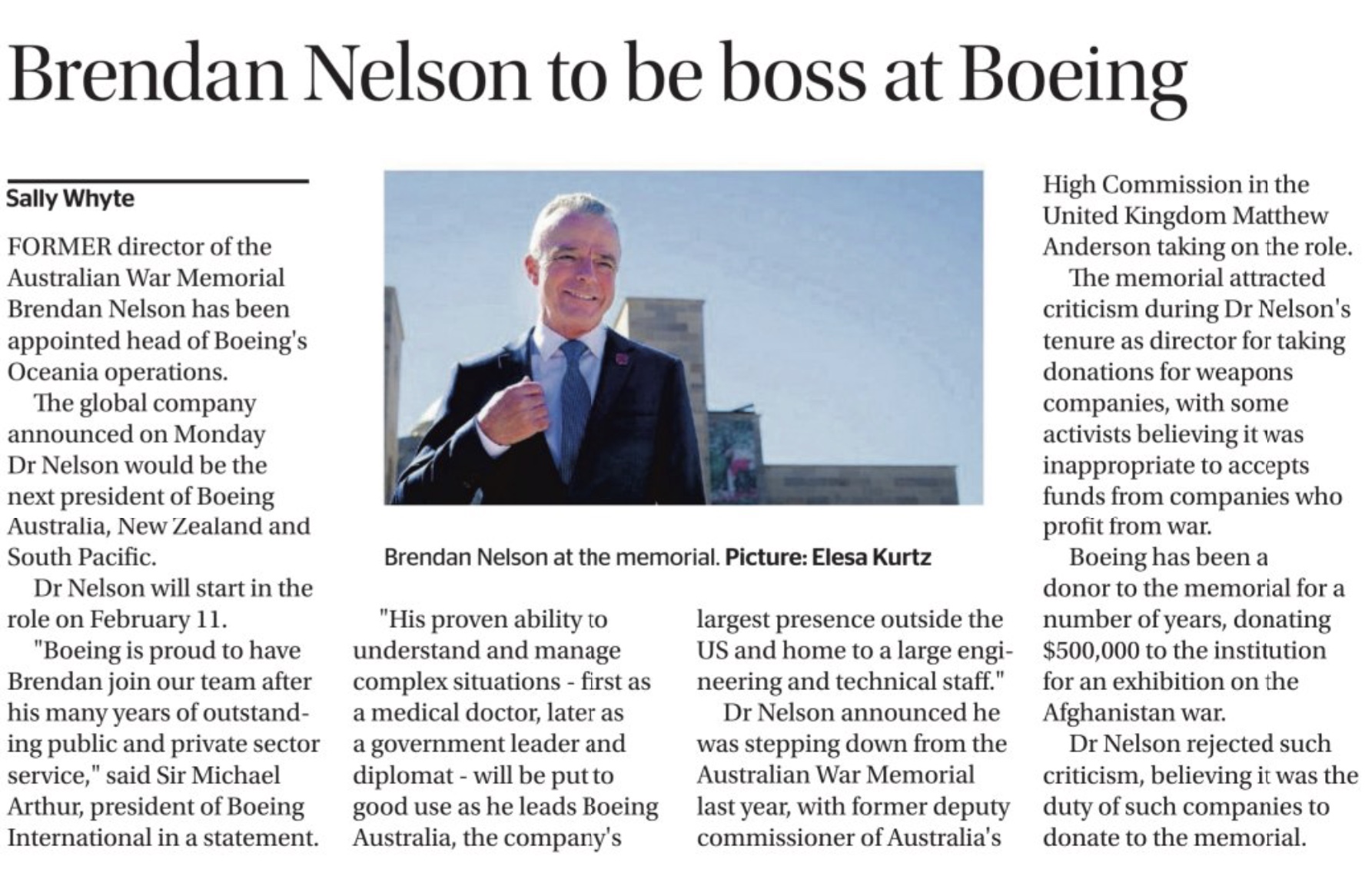
Systems investment critical for our future defence
Australia’s F-35s – lessons from problematic purchase
Give RAAF more strike force say defence chiefs
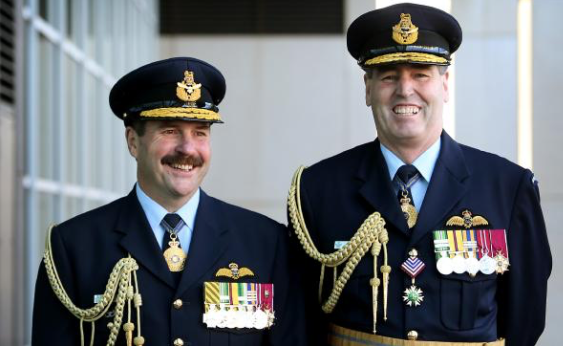
RAAF’s Air Power Strategist named ‘Iconic Indian Air Warrior’
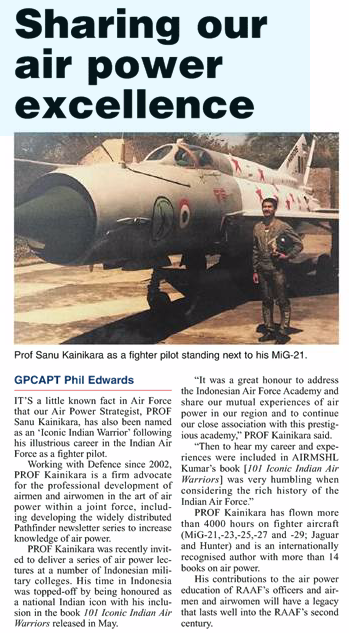
Air Force News – 27 June 2019
Reflections by Ted Ilton – Air Force News February 2001
And a follow-up – Air Force News March 2001
The limitations of unmanned and autonomous systems in a contested environment – Defence Connect
Air Force recapitalisation and is the Air Force big enough?
Independent inquiry Into Administration of DFRDB
RAAF centenary year activities
Stay in touch with the preparations for the Air Forces centenary year via the website. Additionally, you can connect with the centenary planning team, or sign up to receive updates via email.
The AFC In The Great War 1914-1918
Along with artist Norman Clifford, RAAF Association stalwart Lance Halvorson has produced a magificent book, ‘The Australian Flying Corps in the Great War 1914-1918.
The Australian Flying Corps in the Great War 1914-1918 is a history of combat operations, technical details and training notes/summaries, unique to the history of the AFC in the war. The history comprises ‘war diary’ experiences of squadron aircrew, maps, technical drawings and photos, some not seen before. They provide a comprehensive insight into squadron preparations and activities from their deployment in 1916 to their return to Australia at the war’s end. Full details about the book, and how to obtain a copy of it are at The Australian Flying Corps In The Great War 1914-1918
RAAF KC-30A reaches major refuelling milestone
News article and video
Message from the Secretary and Chief of the Defence Force: Defence White Paper
Today, (Thursday 25 February 2016) the Prime Minister and the Minister for Defence released the 2016 Defence White Paper, accompanied by the Integrated Investment Program and Defence Industry Policy Statement.
The 2016 Defence White Paper sets out the Government’s comprehensive long-term plan for Australia’s defence.
The Government has directed a new Defence strategic policy framework in the White Paper that set out what Defence must be able to achieve. The Government’s Strategic Defence Interests and three equally weighted Strategic Defence Objectives replace previous strategic guidance. We must move quickly to align our efforts with the Government’s new direction across our operational and international engagement plans.
The Government is making a significant investment in Defence. The Government will grow the Defence budget to two per cent of Australia’s Gross Domestic Product by 2020-21, increasing the Defence budget from $32.4 billion in 2016-17 to $58.7 billion in 2025-26.
This funding will enable significant investment in the Australian Defence Force’s (ADF) ability to operate as a joint force and in the Defence enablers essential to maximise the force’s effectiveness. The Integrated Investment Program released with the Defence White Paper replaces the Defence Capability Plan. The Integrated Investment Program brings together, for the first time, all capability-related investments, including platforms and systems; Defence estate, such as ADF bases, facilities and training areas; information and communications technology; science and technology; and workforce elements. The Integrated Investment Program is the Government’s direction on Defence capability planning in Defence. It is not discretionary. We must ensure that we work to implement the Investment Program in full, and properly to deliver on the Government’s plans.
The Defence workforce will increase and rebalance over time to achieve the Government’s plans in the White Paper. The permanent ADF will increase to 62,400 by 2025-26. New positions will be created and existing positions will be reallocated to higher priority areas. The future Australian Public Service (APS) workforce will be maintained at 18,200. Within this workforce, 1,200 new APS positions will be created over the next ten years. The majority of new positions will be in intelligence areas, including counter-terrorism, cyber security and space-based capabilities.
The Defence Industry Policy Statement recognises the fundamental contribution that Australian industry and science and technology research organisations provide to Defence capability.
In the next month, we will provide details of the White Paper Implementation Strategy, which will be closely aligned with the First Principles Review. The Defence Committee will be accountable for delivery of the White Paper Implementation Strategy.
We encourage you to find out more about the Defence White Paper and associated documents at www.defence.gov.au/whitepaper
Please take the time to read these documents and discuss them with your supervisors and colleagues.
Principles and practice – Australian defence industry and exports
RAAFSCA guest speaker from 2014, Senator David Fawcett has kindly forwarded the linked report, released Tuesday 8 December by the Defence Sub-Committee of the Joint Standing Committee on Foreign Affairs, Defence and Trade. Forwarding the report Senator Fawcett has advised that it highlights:
“the yawning gap between many elements of Defence industry policy and its implementation as experienced by Australia’s defence industry sector.
The Committee’s recommendations, if implemented, will lead to a far more strategic partnership between Defence and industry that will mean better, more affordable capability for Defence and sustainable work for industry.
The Committee’s starting point was accepting the evidence provided during this inquiry-and validated by recommendations of the First Principles Review-that elements of defence industry are essential to Australian Defence Force capability. Defence therefore has an interest, indeed an obligation to identify elements in industry that are fundamental inputs to capability (FIC) and then to use available means-including domestic procurement programs and support for exports-to enhance and sustain them.
Achieving this will need a change of culture. Defence need to move beyond their reluctance to partner with industry and develop a culture of early engagement to understand and manage risk. There needs to be an acceptance that for some complex systems, value for money may be found more often in long term partnerships than defaulting to ongoing, open competition for an off-the-shelf product or service.
The report’s recommendations should be seen as a key inputs to the implementation process of the First Principles Review, the most significant shake up of Defence Management since the Tange Reforms of 1973.”
Senator Fawcett (senator.fawcett@aph.gov.au) has advised that he would welcome questions or comments about the report.
Delayed defence white paper key test for new minister
US bombers, tankers could rotate to Australia
Oil prices and the Syrian civil war
Australia’s opportunity to shape Air Force’s Centenary
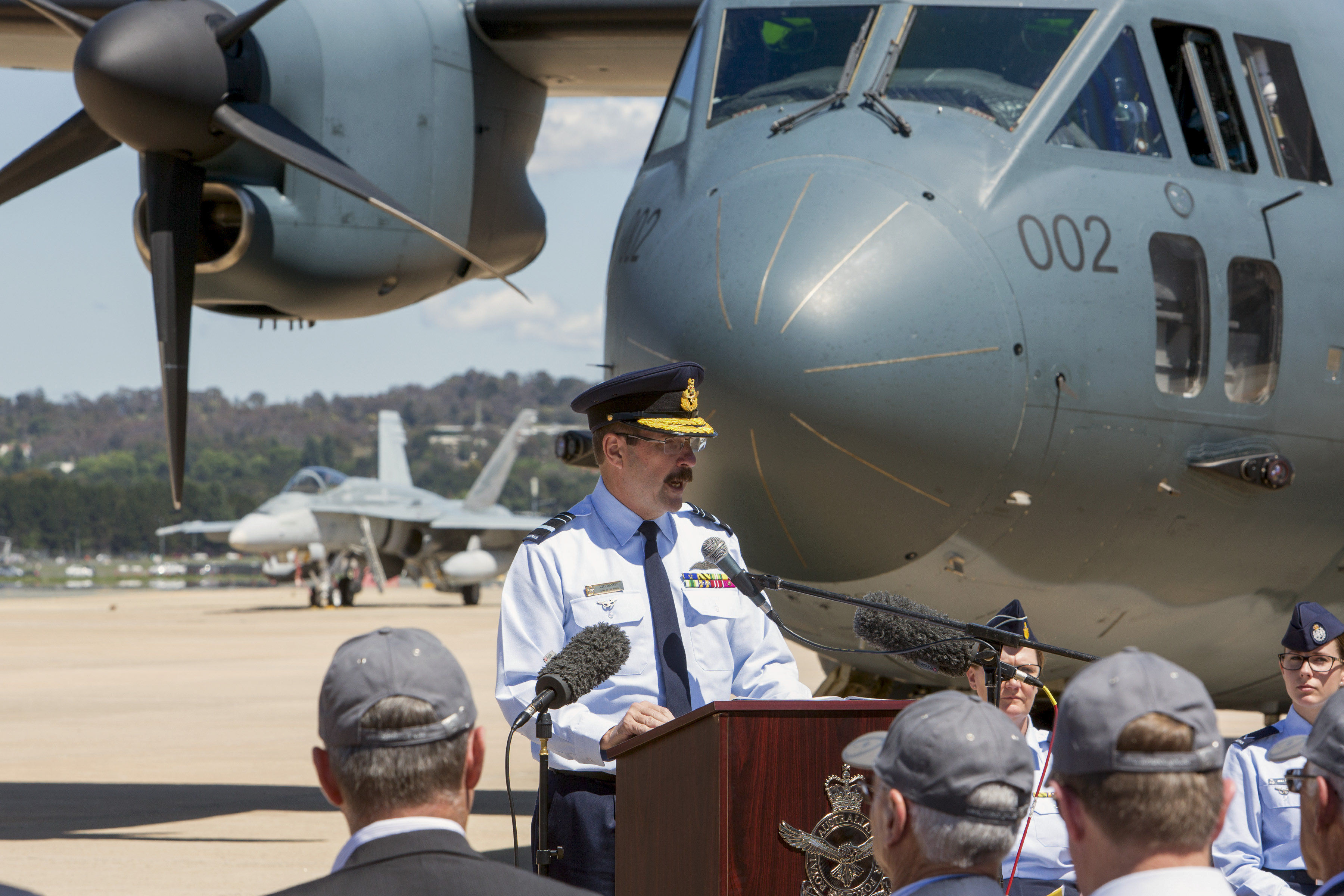
The Chief of Air Force, Air Marshal Leo Davies, AO, CSC officially launched ‘Air Force 2021’ – planning for the centenary of Air Force during a ceremony at Fairbairn on Tuesday 17 November 2015. Speaking at the event, he said it was important for the Australian community to be involved. Air Force’s vision for the centenary is a program of carefully selected events and initiatives that will honour the sacrifices and contributions of the last 100 years, demonstrate today’s highly capable force, and foreshadow our continued evolution into the future. Former Chief of Air Force, Air Marshal David Evans, AC, DSO, AFC (Ret’d), Air Commodore Catherine Roberts, CSC and two junior Airmen, Leading Aircraftwoman Emma Chapman and Leading Aircraftman Mason Gow spoke about the Air Force’s future and how it will effect them in 2021.
RAAF jets would run out of fuel just 30 days into a major conflict
Defence Housing boss Peter Howman quits, stoking privatisation fears
Insiders urge Government to delay long awaited Defence White Paper
U.S. Sees ~1% Price Increase To F-35s If Canada Drops Out
Canada’s new leader to pull planes from anti-Islamic State coalition
Pearl Harbour welcomes the Swamp Ghost
(Note reference to the role of the RAAF helicopter!)
First RAAF F-35A – KC-30A refuel
The Royal Australian Air Force (RAAF) has completed the first fuel transfer with the air refuelling boom from a RAAF KC-30A Multi-Role Tanker Transport (MRTT) to a US Air Force (USAF) F-35A Joint Strike Fighter at Edwards Air Force Base in California. A total of 59 contacts were conducted of which five contacts transferred 43,200 pounds of fuel during the four-hour sortie.
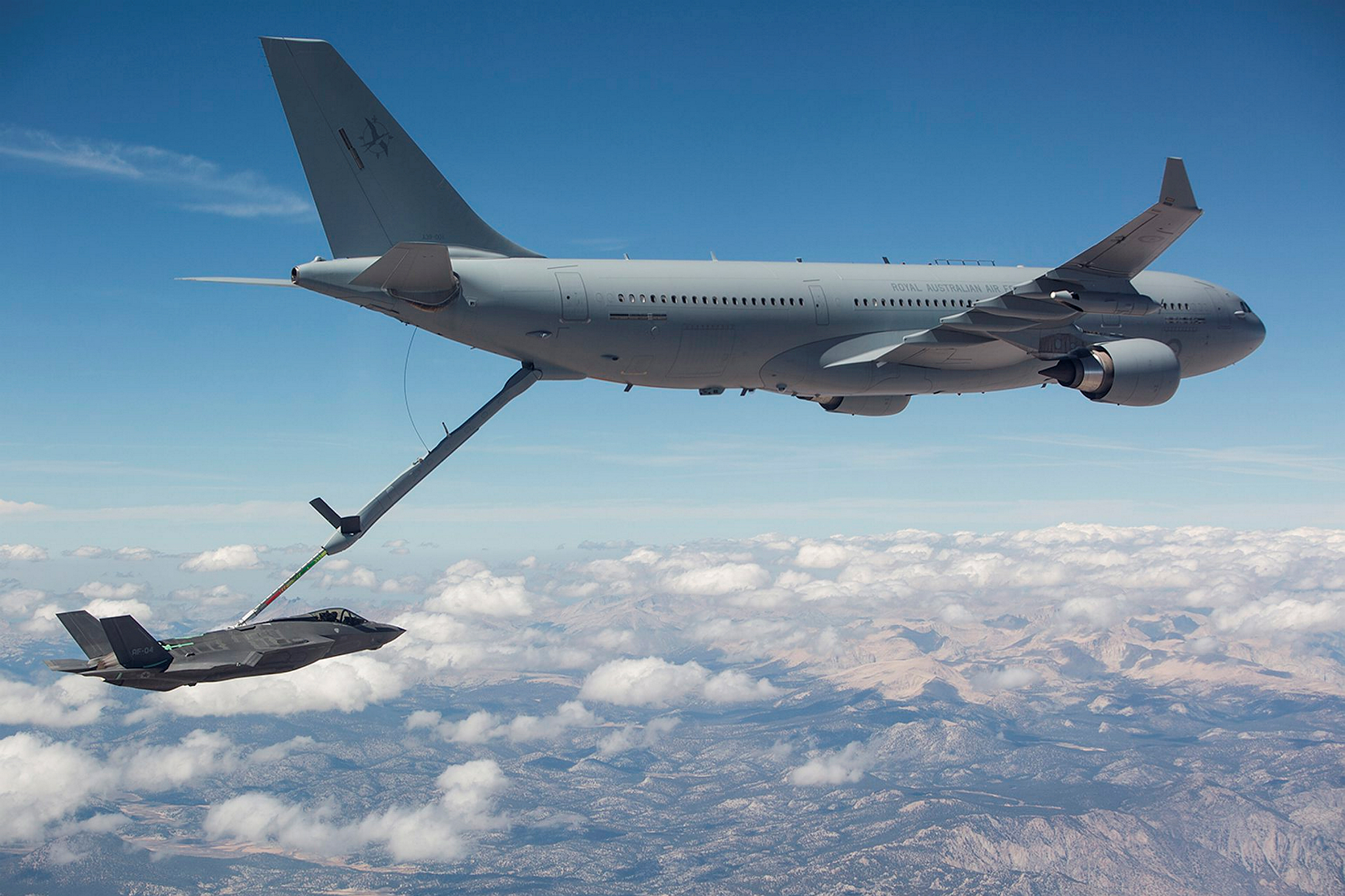
First RAAF F-35 refuel from a RAAF KC-30
Chief of the Air Force, Air Marshal Leo Davies AO CSC, described the trial as a significant step in the development of the KC-30A’s capability.
“Our KC-30A is an essential force multiplier. Mid-air refuelling is critical to ensuring global reach for our aircraft, our people and our equipment,” Air Marshal Davies said.
“Refuelling between the KC-30A and F-35A is an important step towards the KC-30A’s achievement of Final Operational Capability (FOC) and represents continued progress in the development of the F-35A.
“This achievement is significant because the future of Australia’s air combat capability is reliant on the successful partnership between these two aircraft and our ability to be interoperable with our international partners,” Air Marshal Davies said.
The KC-30A has two refuelling systems – the hose-and-drogue and Advanced Refuelling Boom System (ARBS). The two different refuelling systems allow RAAF to support a wide range of coalition aircraft on Operation OKRA where a KC-30A is currently deployed to support combat operations against Daesh in Iraq and Syria.
The five KC-30As are based at RAAF Base Amberley (QLD) and Air Force will receive an additional two in 2018. A single KC-30A can carry a fuel load of more than 100 tonnes and remain 1800 kilometres from its home base with 50 tonnes of fuel available for offload, for four hours.
Australia has committed to 72 F-35As for RAAF Bases Williamtown and Tindal, with the first aircraft arriving in late 2018. The F-35A will replace the ageing F/A-18A/B Hornet with a 5th-generation networked fighter aircraft.
RAAF star rank appointments and promotion – 24 September 2015
60 Minutes – RAAF Middle East operations
Space is seen as increasingly important to military operations
Australia to extend air operations against Daesh into Syria
Australia joins study of Tiger attack helicopter upgrade
Boeing delivers seven Australian Chinooks
RAAF basic flying to relocate to East Sale
X-47B completes first air-to-air drone refueling
Watch Out, China: America Sends Most Advanced Bombers to Asia-Pacific
CAF address to Jericho Innovation Seminar
Boeing Rolls Out First Growler for Australia
First RAAF P-8 on track for mid-2016 first flight
Senior officer appointments and promotions
PM’s floating fighter jet plan quietly sunk by Defence
New CAF, new co-patron of the RAAF Staff College Association
ORGANISATIONAL SHIFTS AND NAME CHANGES IN DEFENCE FROM 01 JULY 2015
RAAF to acquire two additional KC-30s
Support from the sky – how will the UK replace Nimrod?
New Commander Air Mobility Group
Air Force Achievements – 2015 Q1
2015 Air Force Command Selections
First Principles Review of Defence (Ministerial Announcement)
First Principles Review Report – ‘Creating One Defence‘
Defence Force Service Chief appointments
Canberra Times eulogy – 18 May 15
Star rank appointments and promotions
ADF star rank appointment and promotion lists were released in December 2014 and January 2015.
F-35C Completes First Arrested Landing aboard Aircraft Carrier
Double anniversary
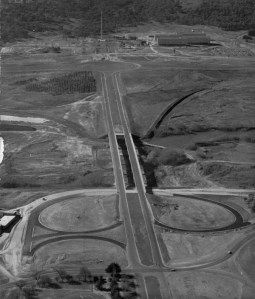
Russell in 1961
Our meeting on 17 Oct 14 coincided with a double anniversary for Canberra. On this day in 1960, the Department of Air began to occupy its permanent offices at the Russell Hill Defence precinct in the national capital, a move expected to take three working days. Building No 1 was the first of four office blocks under construction on the site, and was planned to house the Air Staff and Secretariat of the Department of Air. The rest of the Department would occupy a second building scheduled for completion by May 1961. Over 200 members of staff already working in the Administrative Building in nearby Parkes began the move, along with a further 120 (being the remainder of the Air Staff and Secretariat, together with the Directorate of Works and Buildings) who transferred directly from Melbourne. Until the second building was ready, the Department remained split between Russell and Parkes (where the Air Member for Personnel and his staff were staying), and Victoria Barracks in Melbourne. On this day in 1964, Prime Minister Menzies declared the recently filled Lake Burley Griffin as being ‘duly inaugurated’.
Australia’s First F-35A Takes to the Skies
Subsequent to the release of the above media statement, the second RAAF F-35A has also flown. See video of the first aircraft’s maiden flight.
SOVEREIGN SUBMARINE CAPACITY
Our guest speaker from March this year, Senator David Fawcett has written an opinion piece regarding the Future Submarine (SEA 1000). Subsequently in the Senate he has outlined some more detailed reasons as to why Australia needs to develop the sovereign capacity and competence to manage our submarine capability and why building the submarine in Australia may be the most cost effective way to achieve it.
The text of the speech is in Hansard or if you prefer, you can watch it online.
Senator Fawcett has indicated that he would welcome any feedback you may have on his position on a sovereign submarine capacity.
AUSTRALIAN DEFENCE FORCE CONTRIBUTION TO INTERNATIONAL COALITION AGAINST ISIL
14 September 2014
Prime Minister
The Government is preparing to contribute to an international coalition to counter the ISIL terrorist threat.
The Australian Defence Force will prepare and deploy to the United Arab Emirates up to eight Royal Australian Air Force F/A18 combat aircraft; an E-7A Wedgetail Airborne Early Warning and Control aircraft; and a KC-30A Multi-Role Tanker and Transport aircraft.
In addition, the Australian Defence Force will prepare a Special Operations Task Group as military advisers that could assist Iraqi and other security forces that are taking the fight to the ISIL terrorists.
Australia will place Australian Defence Force personnel in the United States Headquarters to ensure close coordination with our alliance partner and to support planning and logistics.
We are not deploying combat troops but contributing to international efforts to prevent the humanitarian crisis from deepening.
The Government’s decision responds to a formal request from the Government of the United States to contribute specific Australian Defence Force capabilities to the international coalition.
In recent days, I have discussed the situation with President Barack Obama, with Iraq’s new Prime Minister Haider Al-Abadi and with Crown Prince Sheikh Mohammed bin Zaiyed of the United Arab Emirates.
These leaders share the Government’s grave concern about the situation in Iraq and support Australian participation in an international coalition to disrupt and degrade ISIL’s ruthless advance.
The ISIL death cult threatens the people of Iraq, the region and the wider world.
The conflict has reached out to Australia, with at least 60 Australians fighting with ISIL and other terrorist groups and another 100 or so supporting these extremists.
This situation is as much a matter of domestic security as it is of international security.
It is right for Australia to do what it prudently and proportionately can to support international efforts to prevent the spread of ISIL, roll back its gains and alleviate suffering in Iraq.
Australia has already provided air-lift assistance to Iraq, including the movement of arms and munitions and two humanitarian aid drops to stranded people in Northern Iraq using a RAAF C-130J Hercules and C-17A Globemaster aircraft.
I am encouraged by the strong support President Obama’s strategy has received, in particular from Iraq and many neighbouring countries, and the wider international community.
On 24 September, I will attend the United Nations Security Council to further discuss the international effort to counter ISIL.
14 September 2014
Boeing Delivers 4th P-8I Maritime Patrol Aircraft to India
F-35 ‘AU-1’ roll out
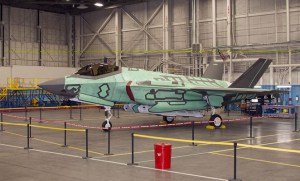
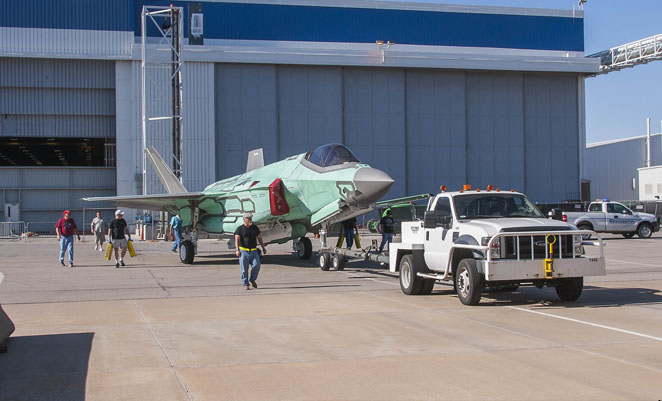
The latest edition of the online Australian Aviation has images of the RAAF’s first Lockheed Martin F-35A Lightning II being towed from the production line to the paint facility. The aircraft, dubbed AU-1 and appearing in primer colours, is due to be officially rolled out in July and delivered to the USAF’s Integrated Training Center at Luke AFB in Arizona later this year.
Star rank appointments and promotions
Appointment of new Director-General ASIO and nomination of new Australian Ambassador to NATO
New military superannuation arrangements
Defence 2014-15 Budget Slideshow
CAF message – release of 2014 Defence Force budget
2015 Air Force 06 and 05 command selection outcomes
Star rank appointments and promotions
Centenary of Military Aviation airshow photos
The Centenary of Military Aviation airshow was held at RAAF Point Cook on the first weekend of March, 2014. The Saturday of the 1st March was the 100th anniversary of the first military flight in Australia, when a Bristol Boxkite first flew from the Point Cook airfield.
The airshow, with its emphasis on historical aircraft, was a proper tribute to the many thousands of Australians who served in the RAAF, and earlier Australian military aviation formations, over the last century.
High quality display flights in a range of aircraft were performed by RAAF and guest pilots, in a range of aircraft, from the RAAF Museum’s 1914 Bristol Boxkite replica, through to contemporary RAAF aircraft.
This photoessay depicts historical RAAF aircraft, and some allied types, through to the Vietnam War era. Bristol Boxkite photos were generously provided by AIRMSHL John W. Newham AC, RAAF (Retd).
A FAIR GO FOR SOME VETERANS – TO BE DELIVERED FROM 1 JULY 2014
Further to the media release below, RAAF Association National President, AVM (Retd) Brent Espeland has advised that this is:
“A good result for DFRDB over 55 recipients after a long campaign. The under 55 DFRDB and MSBS recipients are next on the agenda and I anticipate a drawn out battle. You might recall things came to a head somewhat when the half year increase was released back in 2011 – the pollies got a 3.9 percent indexation increase and the diggers a 0.1 percent increase!”Fair Go Campaign Co-Directors,Ted Chitham & Alf Jaugietis announced that:
The Government’s FIB has been passed in the Senate today (27 March 2014). This means that the implementation for those superannuates covered by this Bill will be effective from the 1 July 2014. ADSO thanks the Coalition Government for implementing their 2010 pledge and congratulates all, especially Sen Michael Ronaldson for championing the case, and all those who were involved in contributing to this result. While pleased with this success, ADSO regards it as a first step to the achievement of the same fairness for those excluded from this Bill: namely, DFRB/DFRDB superannuates under aged 55 years, and MSBS members.MEDIA RELEASE
The Abbott Coalition Government has delivered its election promise to 57,000 military superannuants and their families.
Minister for Veterans’ Affairs, Senator the Hon Michael Ronaldson, and Assistant Minister for Defence, the Hon Stuart Robert MP, today (27 March 2014) welcomed the passage of the Defence Force Retirement Benefits Legislation Amendment (Fair Indexation) Bill 2014 through the Senate, giving effect to the Government’s commitment to give veterans a fair go.
“Thursday 27 March 2014 is a day for fairness. Today, the Government fulfilled its pledge to give veterans a fair go. We made a promise and we have kept it to the letter”, Senator Ronaldson said.
“From 1 July 2015, Defence Forces Retirement Benefits scheme (DFRB) and Defence Force Retirement and Death Benefits scheme (DFRDB) military superannuants aged 55 and over will have their pensions indexed in the same way as age and service pensions. The fair indexation provisions will also extend to reversionary (widow) pensioners aged 55 and over.”
“This has been a long fought campaign for equity, justice and fairness, by the entire veteran community across Australia. The Coalition promised our veterans a fair go before the 2010 and 2013 elections and now we have delivered our promise.”
Assistant Minister for Defence, the Hon Stuart Robert MP, said that from 1 July this year military superannuants and their families would benefit from the change in indexation arrangements.
“The passing of this legislation today confirms this Government’s recognition of the unique nature of military service and the sacrifices military personnel and their families make on behalf of all Australians.”
“This legislation is an investment in fairness and will ensure the purchasing power of DFRB and DFRDB military superannuation pensions is maintained.”
“By passing this legislation today, veterans and their families have finally been delivered the fair go that they deserve, and that they were promised”, Senator Ronaldson and Mr Robert said.
P-8 Poseidons for the RAAF
The US Air Force for Dummies – Part II
The debate continues!
The US Air Force for Dummies – Part I
The above link contains some elementary but well reasoned arguments for an independent air force. The argument rebutted by the article is also linked within the article.
Original RAAFSCA Plaque at the RAAF Museum
Thanks to the good offices of GPCAPT Peter “Norf” Norford, (then Chief of Staff at ACSC), the RAAF Staff College Association’s original plaque is now at the RAAF Museum where it will be refurbished and displayed for all to admire. Watch this space for further news about the grand reveal!
2013 White Paper media release
Joint Strike Fighter Reporting
Further reporting on the F-35 Joint Strike Fighter and a link to the ABC Four Corners report on iView is at: http://www.abc.net.au/news/2013-02-18/pentagons-doubts-on-joint-strike-fighter/4524962.
Asian arms race may leave us behind
RAAF Staff College Association Plaque
The photos below show progress with the refurbishment of the Association’s plaque at the RAAF Remembrance Driveway Memorial (the Hughie Edwards VC Memorial Grove), on the outskirts of Canberra. Despite the best efforts of the Executive, the original plaque had deteriorated badly. With financial assistance from Lockheed Martin Australia Limited, WGCDR Ted Ilton, the founding Association President, a number of Association members, and the estate of the late WGCDR Mervyn Heinrich, the Association commissioned a new bronze plaque. The new plaque, with plain relief lettering and badges, was installed by GPCAPT Arthur Skimin. The original plaque has been offered to the RAAF Museum for safekeeping.
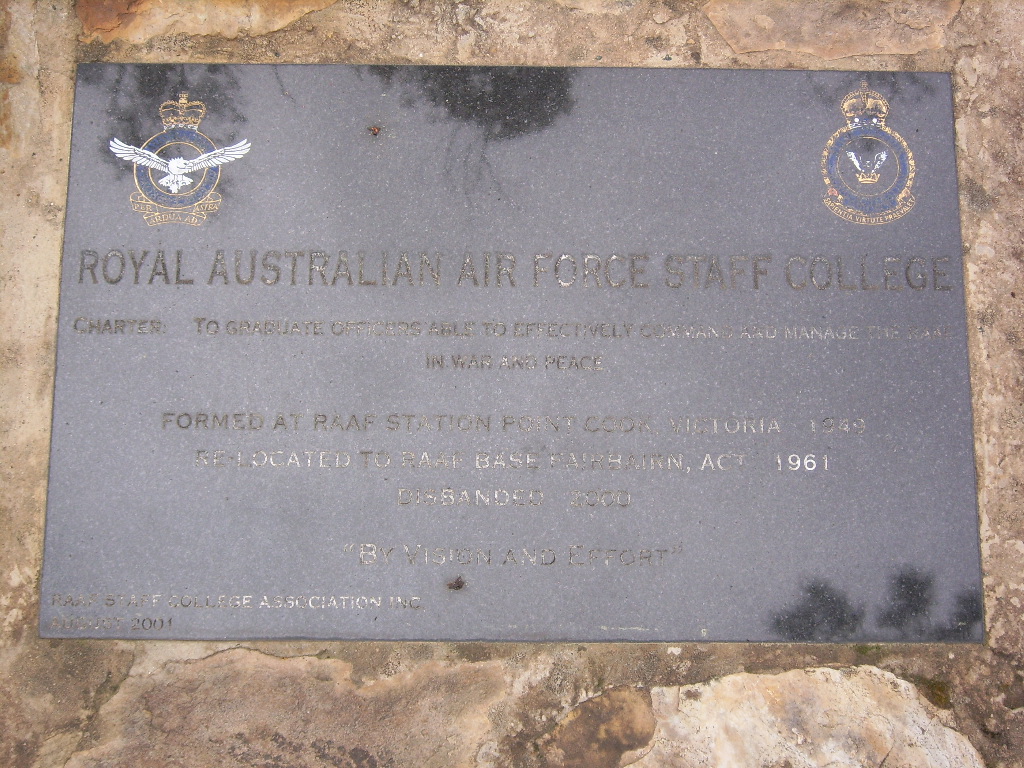
Original RAAF Staff College Association plaque
13 Sep 10

New RAAF Staff College Association plaque
17 Mar 12
 RAAF Staff College Association
